If you're an Ohio employer navigating the workers' compensation system, you've likely come across the term "MCO" — managed care organization. For many business owners and HR professionals, the MCO's role can feel like a black box: you know it exists, but you're not entirely sure what it does or how it affects your bottom line. Understanding how MCOs work within Ohio's system can help you make smarter decisions for your injured workers and your organization.
What Is an MCO?
In Ohio, the Bureau of Workers' Compensation (BWC) requires most private employers to work with a certified managed care organization. The MCO acts as the medical management arm of the workers' compensation claim. It does not pay the claim — that remains the BWC's responsibility — but it coordinates and oversees the medical side of the process from the moment an injury is reported.
Think of the MCO as the go-between connecting your injured employee, their treating physician, and the BWC. Its core job is to make sure the right medical care happens at the right time, with the goal of helping injured workers recover and return to work as quickly and safely as possible.
Key Responsibilities of an MCO
MCOs handle a range of functions that directly affect how a claim unfolds. Broadly, these include:
Injury reporting: Employers report new injuries to their MCO, which then files the First Report of Injury with the BWC.
Medical bill processing: The MCO reviews and processes medical bills submitted by providers before payment is issued.
Utilization review: The MCO evaluates whether requested medical treatments are appropriate, necessary, and consistent with the nature of the injury.
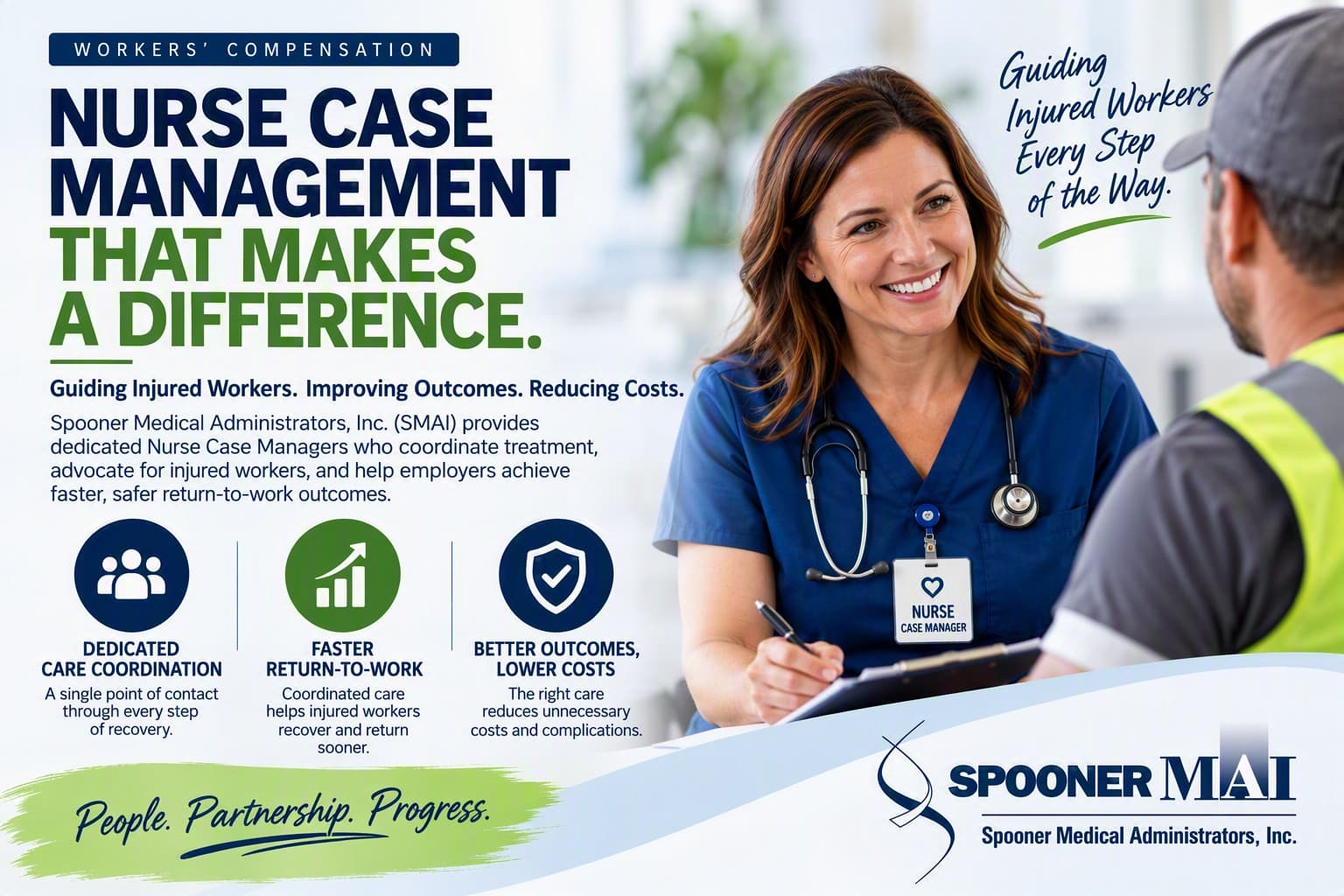
Nurse case management: For more complex injuries, an MCO may assign a nurse case manager to coordinate care, communicate with providers, and support the employee's recovery plan.
Return-to-work coordination: MCOs are expected to actively support return-to-work efforts, which can include working with you to identify modified-duty opportunities.
Why Your MCO Choice Matters
Ohio employers have the ability to select their MCO, and that choice carries real consequences. Not all MCOs operate with the same level of responsiveness, communication quality, or return-to-work focus. A well-run MCO can mean faster medical decisions, fewer delays in treatment, and a smoother path back to work for your employees. A less attentive one can slow the process down and leave you and your injured worker without clear guidance.
When evaluating an MCO, consider factors such as:
How quickly they respond to employer and provider inquiries
Their track record on return-to-work outcomes
The experience and accessibility of their nurse case managers
How well they communicate with all parties throughout the claim
You can only switch MCOs during designated open enrollment periods set by the BWC. It's worth reviewing your MCO relationship periodically, especially if you feel claims are not being managed proactively.
How the MCO Fits Into Your Broader Workers' Comp Strategy
Your MCO is one piece of a larger picture that includes your BWC premium structure, your experience modifier, and any group rating or retrospective rating programs you participate in. Effective medical management — which a strong MCO provides — can influence claim duration and cost, which in turn affects your claims history and future premiums. Employers who stay engaged with their MCO, communicate promptly when injuries occur, and actively participate in return-to-work planning tend to see better outcomes across the board.
Ready to lower your workers’ compensation costs?
Choosing Spooner MAI as your Ohio BWC Managed Care Organization costs you nothing extra — and our best practices can save you significantly while returning employees to work faster.